
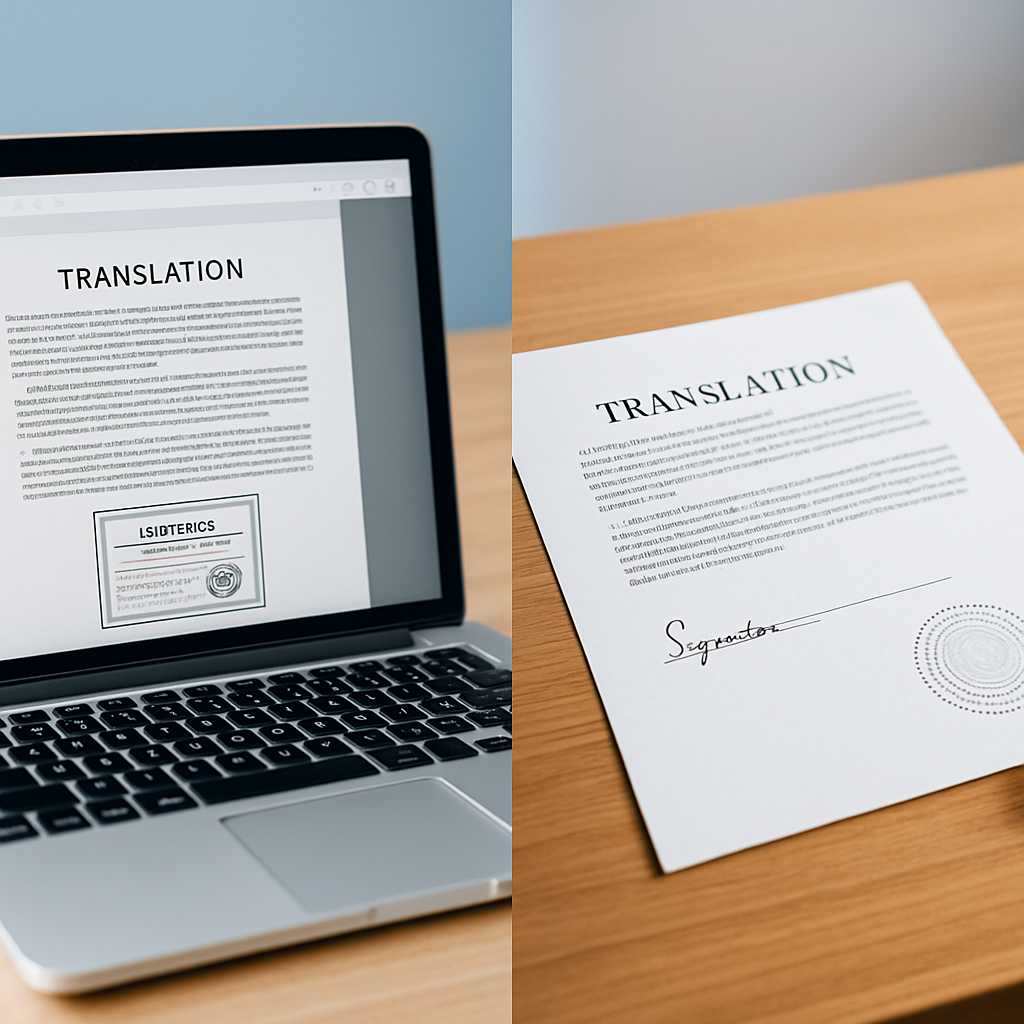
Understanding Certified Translations
Certified translations are essential for various legal and official documents, ensuring that the translated text is accurate and recognized by authorities. Whether you need a birth certificate, marriage certificate, or any other official document, the format of the translation can significantly impact its acceptance.
Digital vs Hard Copy Certified Translations
When deciding between digital and hard copy certified translations, it’s crucial to understand the advantages and limitations of each format.
Digital Certified Translations
Digital certified translations are typically provided in PDF format. This format has become increasingly popular due to its convenience and accessibility. Here are some key benefits:
- Easy Submission: Many institutions now accept digital documents, making it easier to submit your translations online.
- Quick Delivery: Digital translations can be delivered almost instantly, reducing waiting times.
- Cost-Effective: Digital formats often incur lower costs since they eliminate printing and shipping fees.
Hard Copy Certified Translations
Hard copy certified translations involve printed documents that are often required for official submissions. Here are some reasons why you might choose this format:
- Official Requirements: Some authorities still mandate hard copies for legal documents, especially for immigration or court purposes.
- Physical Signatures: Hard copies can include original signatures and stamps, which may be necessary for certain applications.
- Document Integrity: A physical document can sometimes be perceived as more trustworthy than a digital version.
Which Format Should You Choose?
Your choice between digital and hard copy certified translations should depend on the specific requirements of the institution or authority you are dealing with. Here are some considerations:
1. Check Submission Guidelines
Always verify the submission guidelines of the authority you are submitting to. For example, if you are submitting a translated birth certificate to UK authorities, ensure you know whether they accept digital formats.
2. Consider Your Timeline
If you need a quick turnaround, digital translations may be the better option. However, if you have time and the requirement for a hard copy, consider that route.
3. Evaluate Cost Implications
Consider your budget. Digital translations can save you money, while hard copies may involve additional costs for printing and shipping.
Conclusion
In conclusion, both digital and hard copy certified translations have their unique advantages. Understanding your specific needs and the requirements of the receiving authority will help you make an informed decision. If you are still unsure, consulting with a certified translation agency can provide clarity and guidance.
FAQs
What is a certified translation?
A certified translation is a translation that is accompanied by a signed statement from the translator or translation agency attesting to its accuracy and completeness.
Can I use a scanned copy for certified translation?
Generally, scanned copies are not accepted for certified translations. Most authorities require original documents or hard copies.
How long does it take to get a certified translation?
The time required for a certified translation can vary based on the document’s length and complexity, but digital translations can often be delivered within hours.
Are digital certified translations legally accepted?
Yes, many institutions accept digital certified translations, but it is essential to verify with the specific authority.
What types of documents require certified translations?
Common documents requiring certified translations include birth certificates, marriage certificates, academic transcripts, and legal documents.
Need a certified translation?
Send us your document and tell us where it will be used. We'll help you confirm the right certification and provide a quotation.
Request a quote