
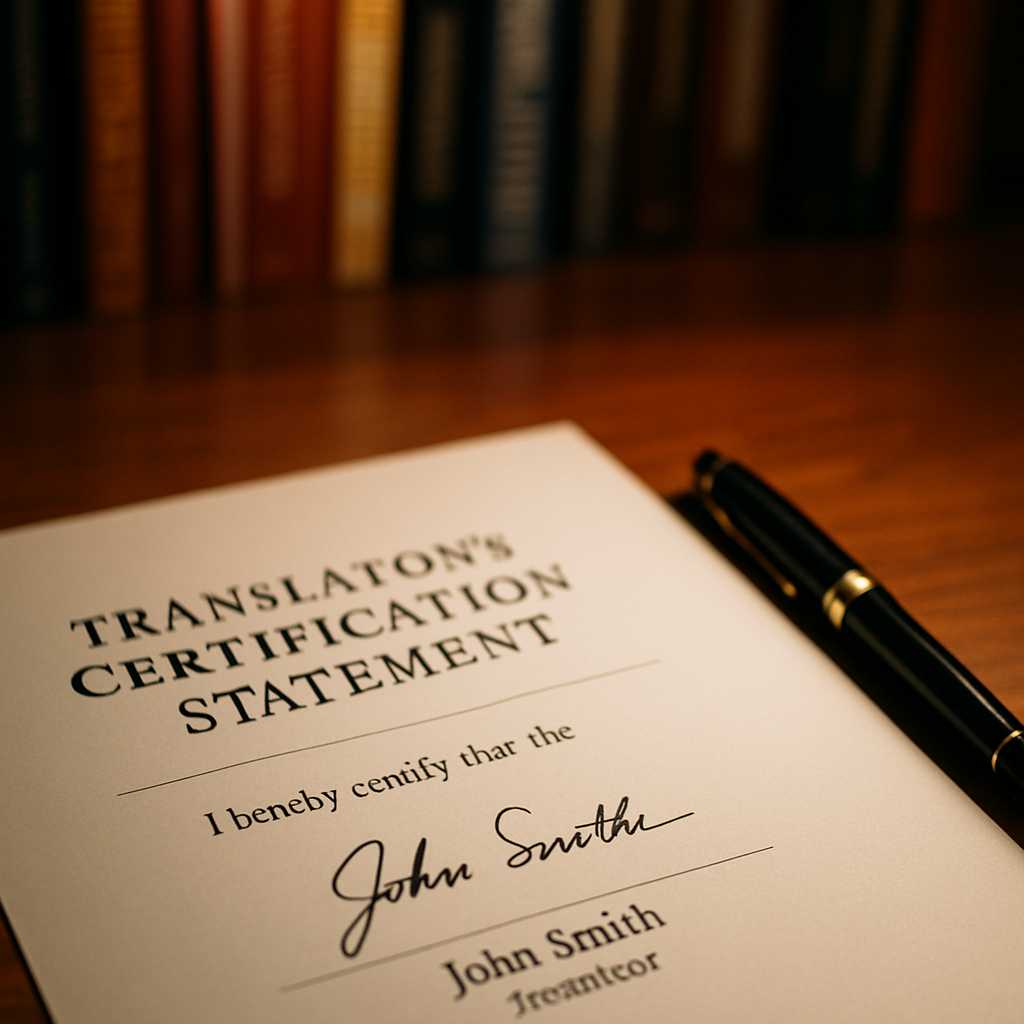
Understanding the Importance of a Translator’s Certification Statement
A translator’s certification statement is a crucial document that verifies the accuracy and authenticity of a translated text. This statement is often required by institutions, government agencies, and legal entities to ensure that the translation meets specific standards. Understanding what details must appear on a translator’s certification statement is essential for both translators and clients seeking certified translations.
Key Components of a Translator’s Certification Statement
To ensure that a translator’s certification statement is valid and accepted, it should include the following key components:
1. Translator’s Information
- Name: The full name of the translator must be clearly stated.
- Contact Information: Include the translator’s phone number, email address, and physical address.
- Qualifications: A brief description of the translator’s qualifications, such as certifications or degrees in translation or linguistics.
2. Details of the Translation
- Source Language: Specify the original language of the document being translated.
- Target Language: Indicate the language into which the document has been translated.
- Document Description: Provide a brief description of the document, including its title and purpose.
3. Certification Wording
The certification wording is a formal declaration that the translation is accurate and complete. It should include phrases such as:
“I, [Translator’s Name], certify that the above translation is a true and accurate representation of the original document.”
4. Signature and Date
- Signature: The translator must sign the certification statement to validate it.
- Date: Include the date when the translation was completed and certified.
5. Notary Public (if required)
In some cases, a notary public may need to witness the signing of the certification statement. If this is required, ensure that the notary’s information and seal are included.
Why Accuracy Matters
Accuracy in a translator’s certification statement is paramount. Any discrepancies or omissions can lead to the rejection of the document by authorities or institutions. Therefore, both translators and clients must ensure that all required details are included and correctly stated.
Common Questions About Translator’s Certification Statements
What is the purpose of a translator’s certification statement?
The purpose of a translator’s certification statement is to verify that the translation is accurate and complete, providing assurance to the receiving party.
Do all translations require a certification statement?
Not all translations require a certification statement. However, official documents such as legal, academic, or immigration papers typically do.
Can I use a scanned copy of a certification statement?
In most cases, a scanned copy is acceptable, but some institutions may require an original signed document.
What should I do if my translation is rejected?
If your translation is rejected, review the feedback provided, and ensure that all necessary details are included in the certification statement before resubmitting.
Conclusion
Understanding what details must appear on a translator’s certification statement is essential for ensuring the validity and acceptance of translated documents. By including all necessary components, translators can provide clients with the assurance they need for their important documents.
For more information on certified translation services, visit our About Us page.
Need a certified translation?
Send us your document and tell us where it will be used. We'll help you confirm the right certification and provide a quotation.
Request a quote